Navigation & Wayfinding Design Sprint
Facilitated a fully remote 5-day design sprint to redesign ADT.com navigation, producing A/B test winners that drove a 7.8% lift in sessions-to-leads conversion at 99% statistical significance.
- Team
- 1 UX Lead1 UXR5 UXD1 PM1 Content
- Timeline
- 5-day sprint + follow-up execution
- Category
- Information Architecture
- Impact
- +7.8% sessions-to-leads at 99% stat sig
Published: Sep 2021
TL;DR
ADT's navigation was creating friction across the entire conversion funnel. I facilitated a fully remote 5-day design sprint using the Google Ventures method, leading the team through inspiration, independent ideation, alignment, and prototype — all within a week. The sprint output was implemented as a live A/B test on adt.com, producing a 7.8% lift in sessions-to-leads at 99% statistical significance, a 5.7% lift in sessions-to-positive-actions, and a 5.4% lift in sessions-to-sales. The new navigation was adopted sitewide.
Context & Challenge
The Problem
As Senior Manager of Product Design, I facilitated the sprint, led the strategic vision, and owned follow-up execution — from tested concept to live A/B experiment.
Navigation is the backbone of a website — when it fails, everything downstream fails with it. At ADT, users were struggling to find what they needed on adt.com, affecting every metric in the funnel: leads, sales, and any meaningful interaction in between. The business needed a faster, more intuitive navigation structure and needed to validate any solution with real traffic before committing to a full rollout.
Setting Up the Sprint
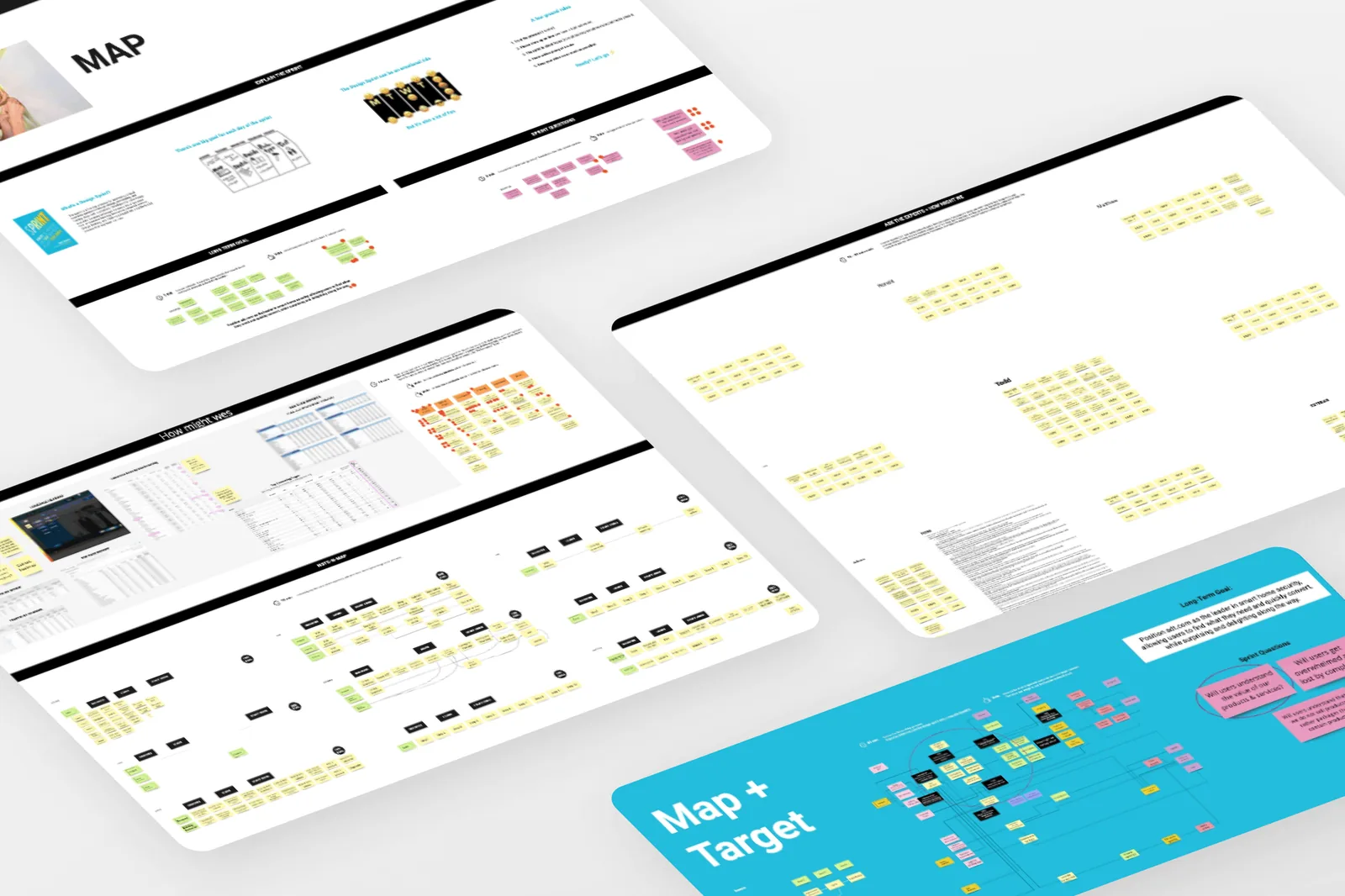
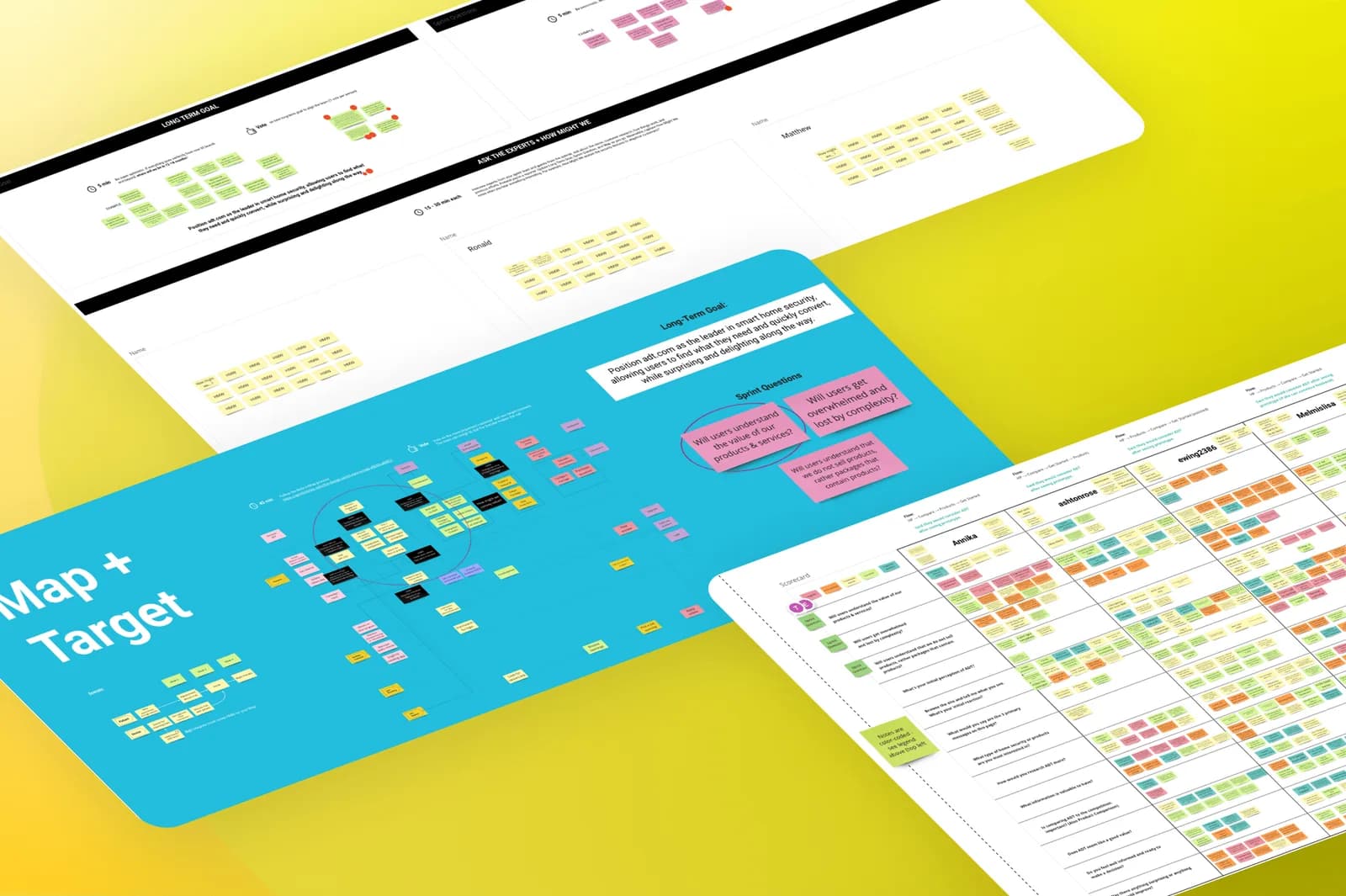
At my direction, the team mapped the entire CX journey of users on adt.com with input from subject matter experts across the organization. This wasn't a design exercise — it was a structured alignment process to make sure the sprint targeted the right problem before anyone picked up a pen. The mapping session identified where users were falling off, surfaced the highest-leverage intervention point, and gave the team a shared understanding of the full funnel before the sprint began.
Design & Solution
The Sprint Format

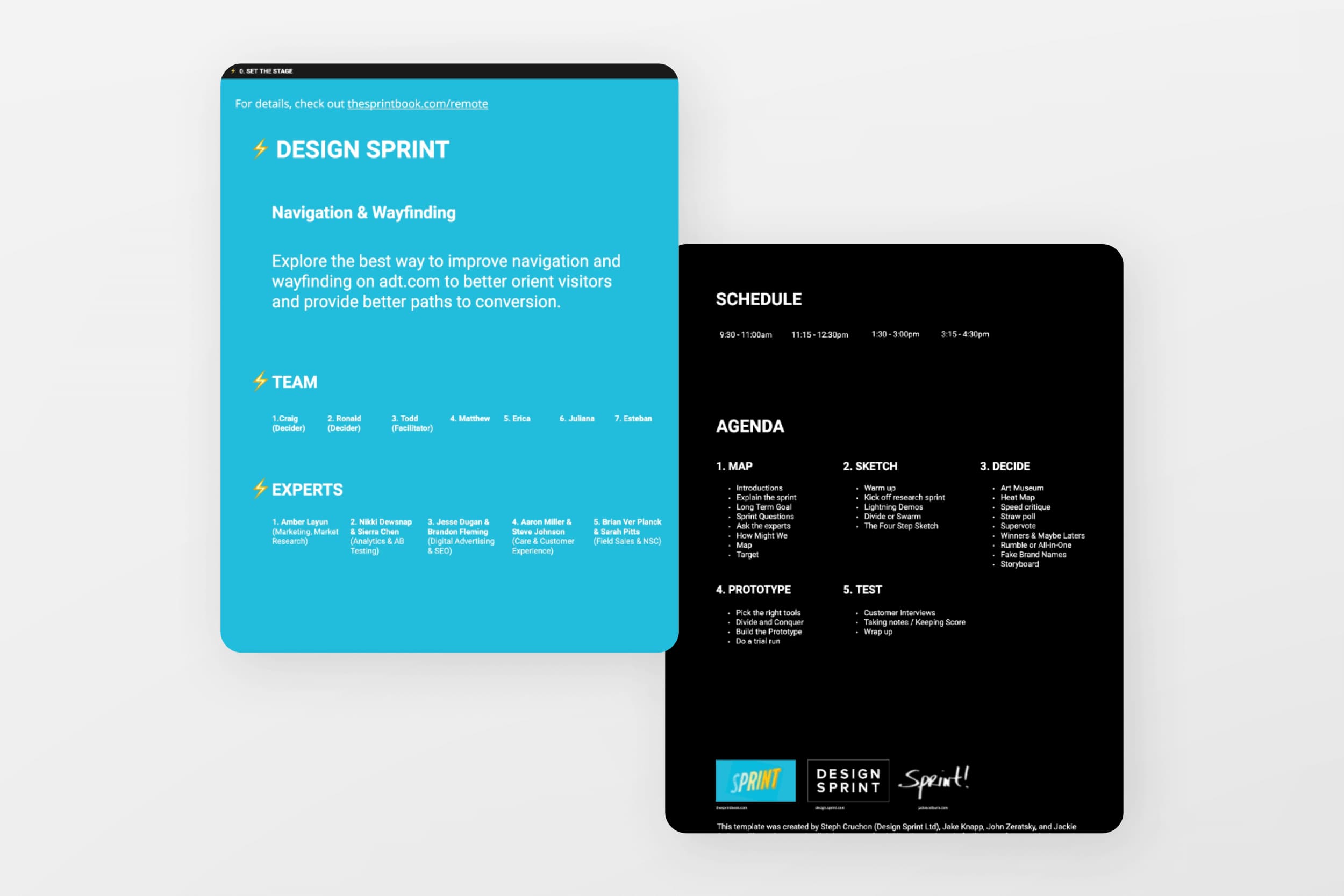
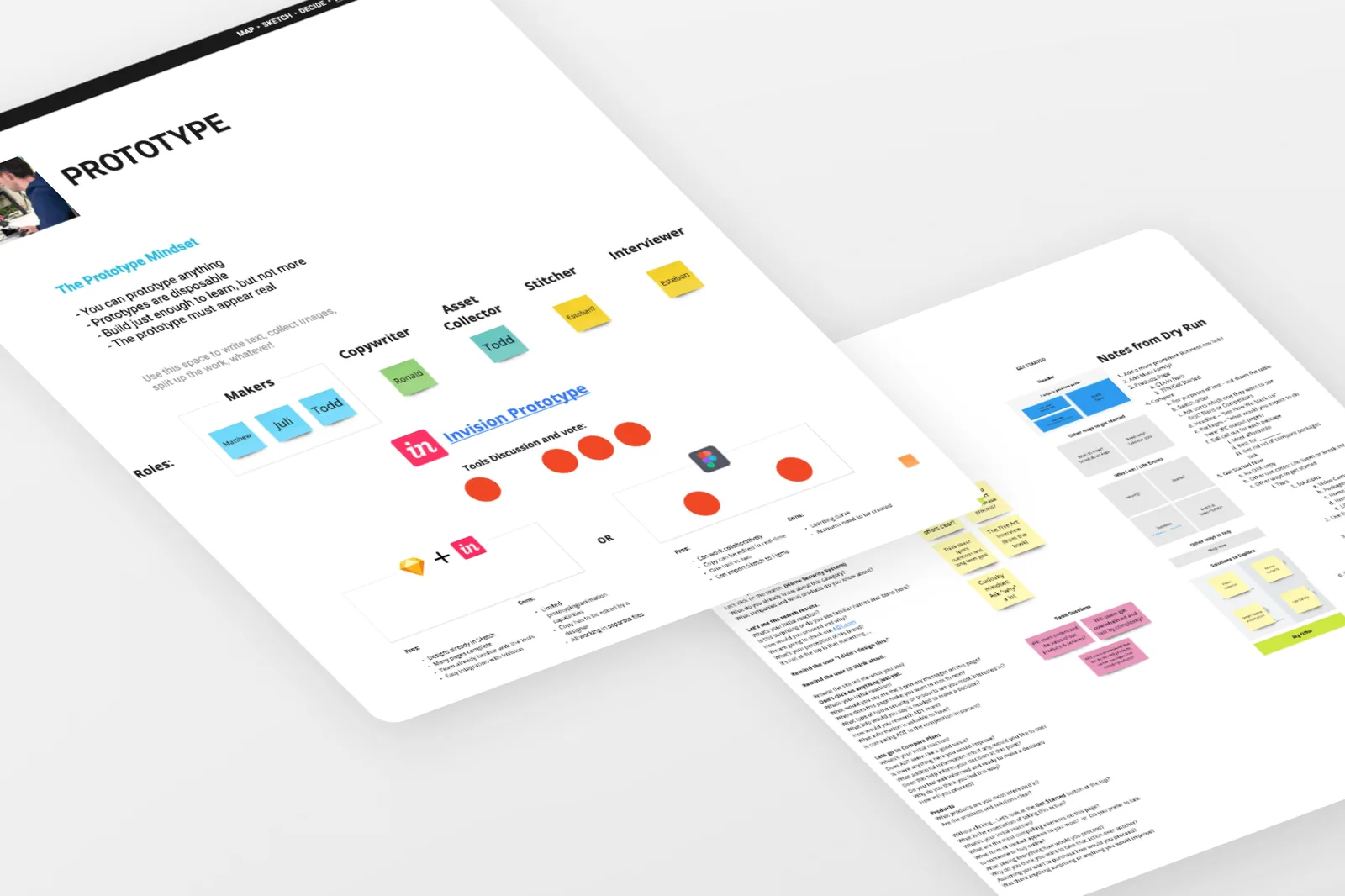
I led a fully remote 5-day design sprint based on the Google Ventures method, using Zoom and Miro as the collaboration environment. Remote design sprints require more structure than in-person ones — transitions are slower, energy drops faster, and alignment requires more explicit facilitation. I adapted the GV format to account for these constraints.
The week moved through a structured arc:
- Inspiration exercises to expand the team's frame of reference beyond ADT's current navigation
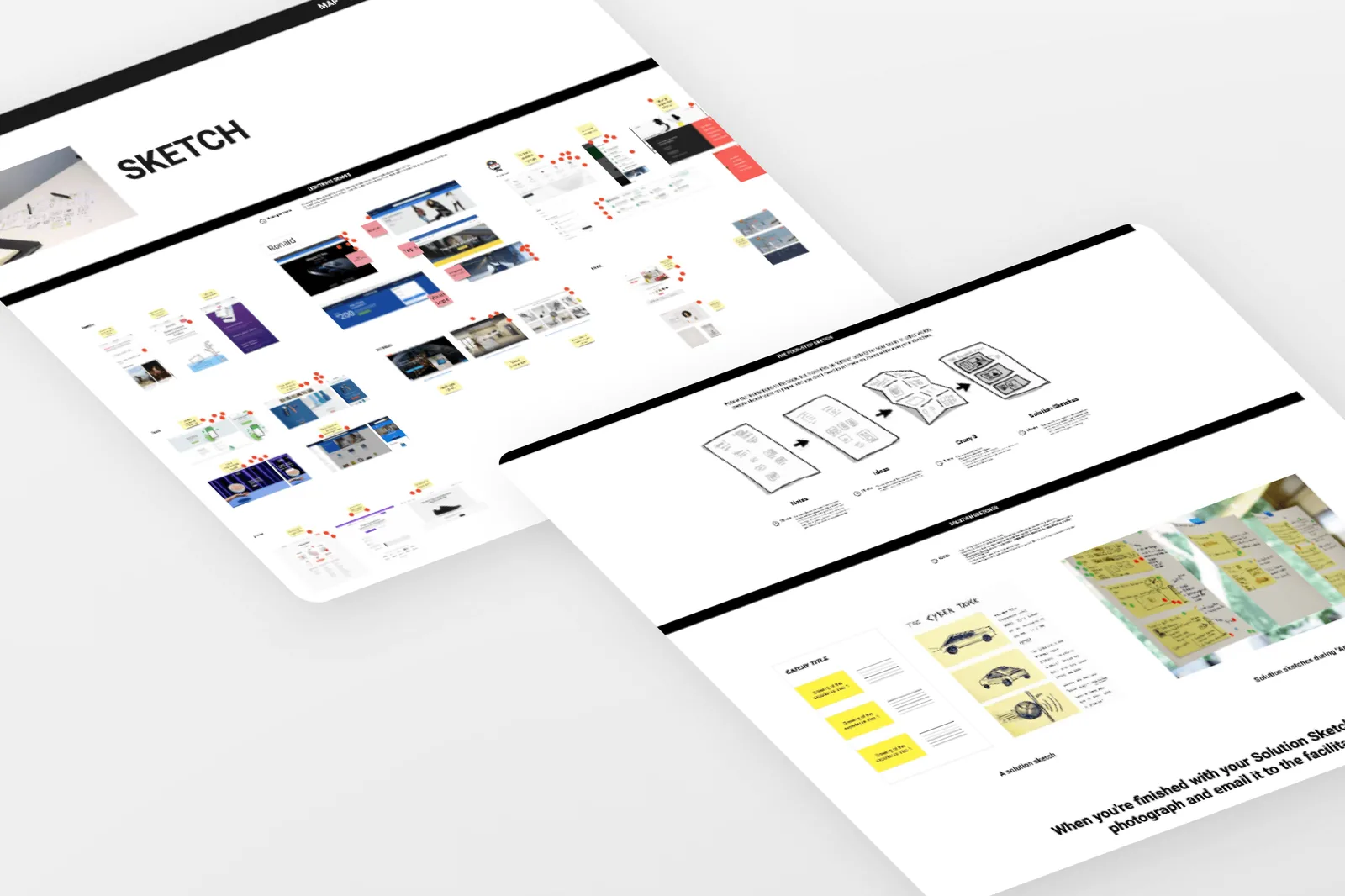
- Individual ideation — each participant developed concepts independently before sharing, to avoid groupthink
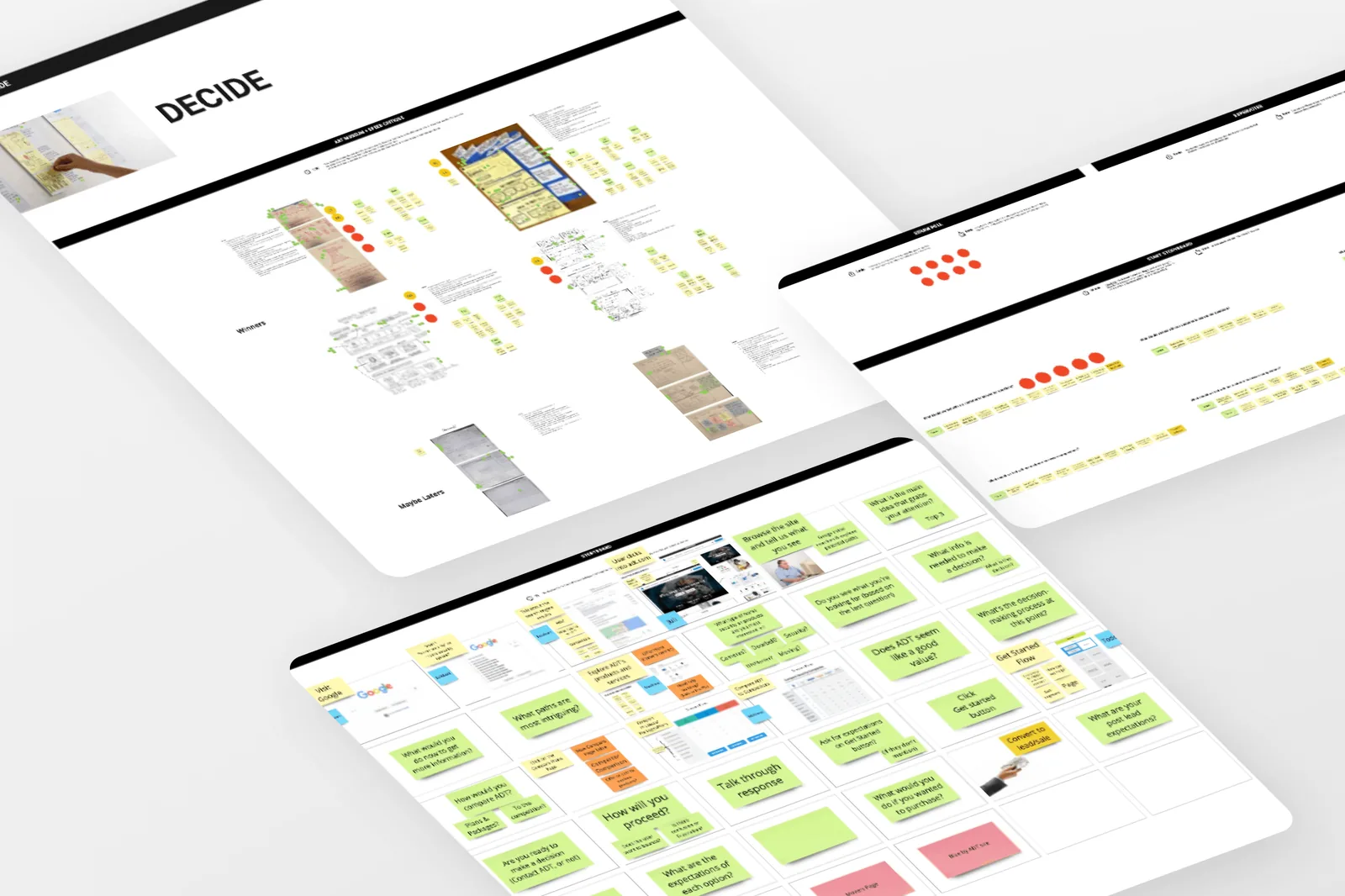
- Voting and prioritization — structured dot voting on the strongest themes surfaced by independent work
- Alignment on a single vision — the team converged on a direction to take into prototyping
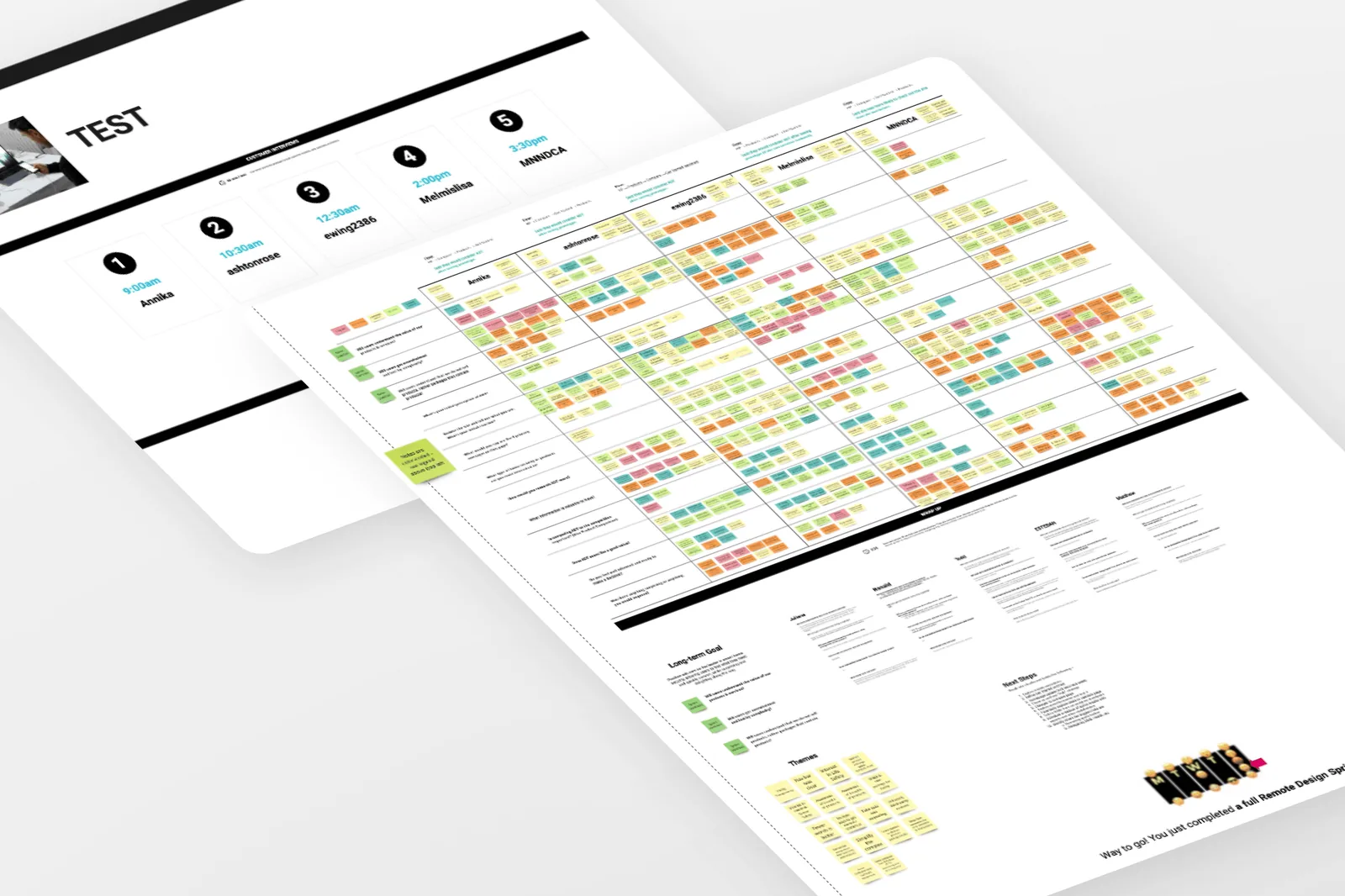
- Prototype on Thursday, test on Friday — a working prototype built and tested with real users within the sprint week
What We Built
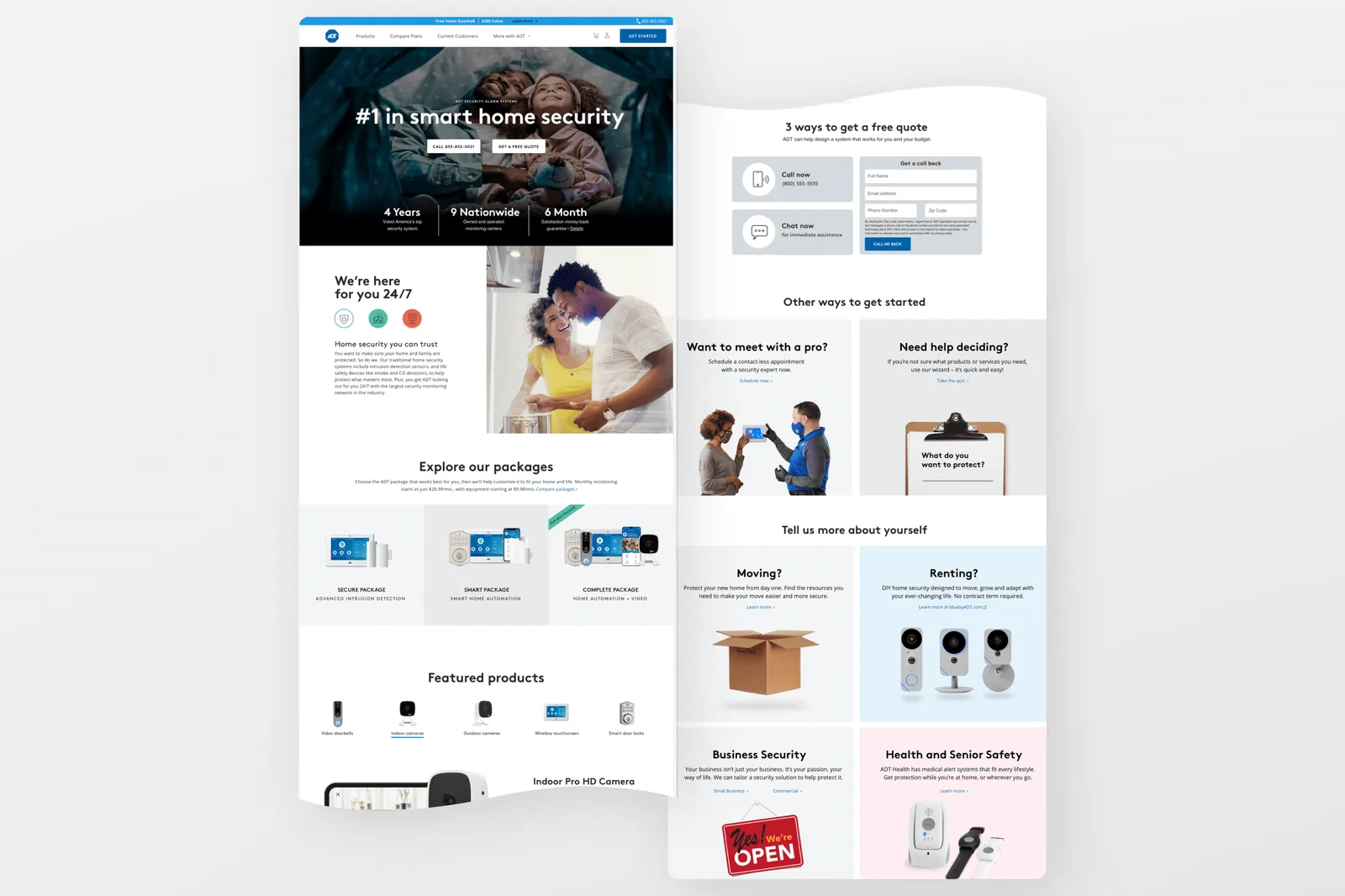
The sprint produced a prototype of a redesigned navigation — slimmer, more focused, and structured around a consumer-choice model for getting started. The "get started" flow evolved significantly, moving from a product-led navigation to a needs-led approach that matched how users actually thought about home security.
From Sprint to A/B Test
The sprint outcome became a series of A/B tests on adt.com with live traffic. Design sprints generate hypotheses; only real traffic validates them. I led the follow-up execution to translate the sprint concept into a testable implementation, coordinating with engineering and stakeholders to get the experiment running.
Leadership & Collaboration
Facilitation is active leadership — holding the team to the process when the impulse is to skip ahead, managing energy across a full week of intensive collaboration, and making judgment calls about when to push for consensus and when to let ambiguity stand. Running this remotely added coordination overhead at every step. The sprint ran on schedule and produced a testable output within the week.
A design sprint that ends with a prototype and doesn't ship is a failed sprint. I owned the path from sprint output to live test, and the results validated the hypothesis with statistical confidence.
Impact & Outcomes
A/B Test Results
The redesigned navigation, implemented as a live A/B test on adt.com, produced statistically significant improvements across every funnel metric measured:
| Metric | Lift | Statistical Significance |
|---|---|---|
| Sessions-to-Leads | +7.8% | 99% |
| Sessions-to-Positive Actions | +5.7% | 83% |
| Sessions-to-Sales | +5.4% | 73% |
The sessions-to-leads lift at 99% statistical significance is the headline — a near-certain improvement in the metric most directly tied to ADT's business model.
Adopted Sitewide
The new, slimmer navigation was adopted beyond the test, and the consumer-choice approach to getting started evolved into new designs across the site. The sprint produced not just a winning test variant, but a new direction for how ADT's navigation should work.
Running a structured, remote design sprint — and then executing through to A/B validation — demonstrated that rapid, research-grounded design could move fast without sacrificing rigor. The sprint format became a reference point for how the team approached high-stakes design problems with tight timelines.