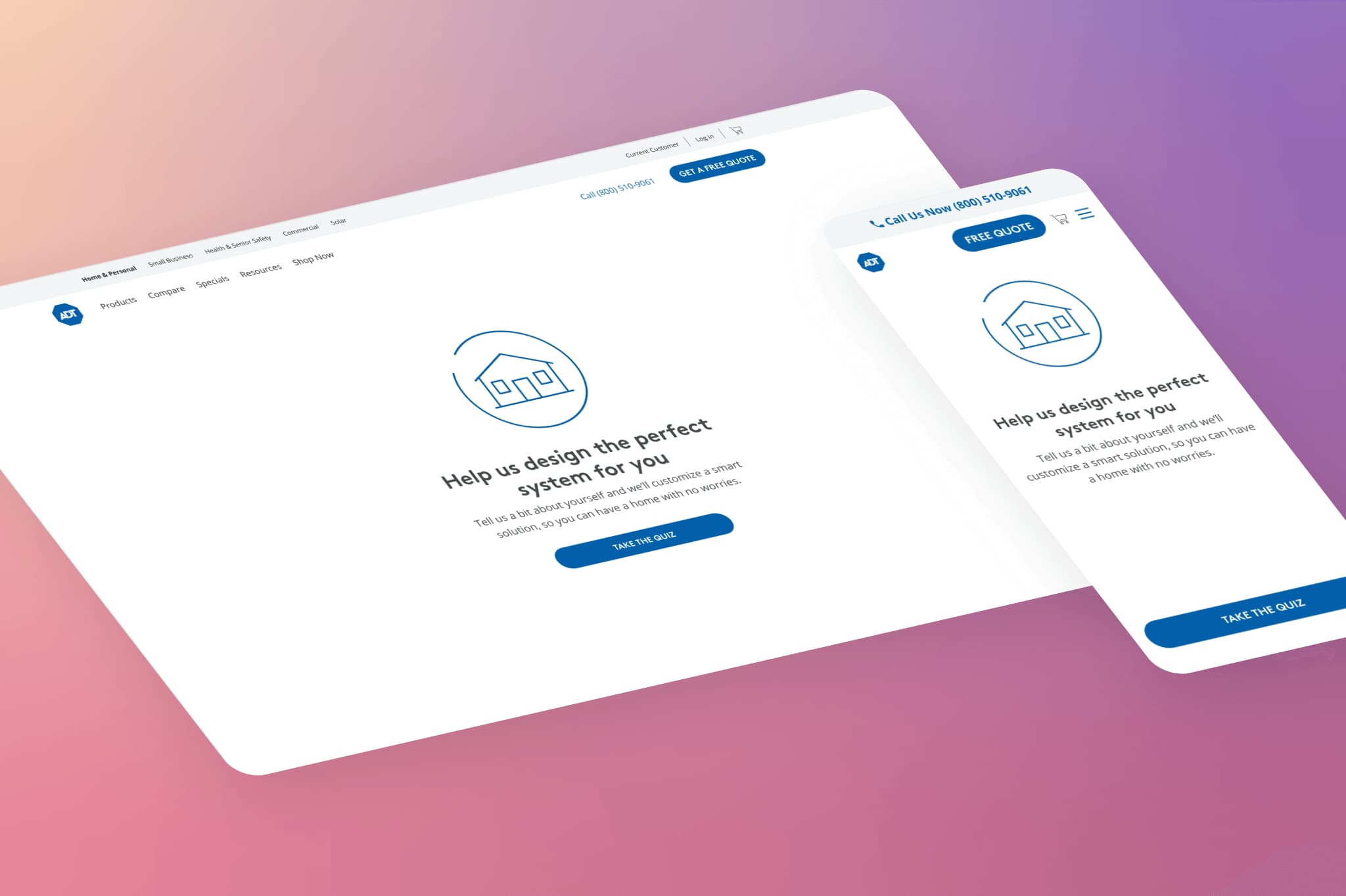
E-commerce Configurator Quiz
Designed a lifestyle-based quiz to help home security shoppers configure the right system for their needs, removing cognitive load and improving confidence at the point of purchase.
- Team
- 1 UX Lead1 UXR1 UXD1 EM1 Content
- Timeline
- Multiple usability testing rounds
- Category
- E-commerce
- Impact
- Removed purchase decision barrier
Published: Jul 2022
TL;DR
ADT shoppers were leaving product pages without buying because they didn't know what to buy. I led the design of a lifestyle-based configurator quiz that asked the right questions, reduced cognitive load, and delivered personalized system recommendations. The quiz was built and refined through multiple rounds of usability testing, with each iteration closing gaps before the next fidelity level was built.
Context & Challenge
The Business Problem
As Director of Product Design, I led the strategic vision of this project — defining product direction, overseeing the UX team, and owning communication with the executive team.
Home security is a complicated product to purchase online. Customers face a maze of choices: different devices, service levels, and nuanced feature sets they have to research and compare before feeling confident enough to buy.
Under my direction, my team conducted user research that uncovered a recurring theme: shoppers were unsure about what to buy and how many of each component they needed. This uncertainty was a direct barrier to conversion — not a lack of interest, but a lack of confidence. The problem wasn't that the products were bad. It was that customers couldn't figure out which combination was right for them.
The insight that shaped the solution: users didn't want to become home security experts to make a purchase. They wanted someone (or something) to ask the right questions and tell them what they needed.
Design & Solution
Design Principles
I assigned my team the project with a clear set of principles to guide the work:
- Short, fun, and easy. The quiz had to feel effortless — any friction would cause dropoff before the user reached their recommendation.
- Lifestyle-based, jobs-to-be-done framing. Questions should reflect how users think about their lives and needs, not how ADT categorizes products.
- The output must pay off the effort. A personalized, compelling recommendation page was as important as the quiz itself.
Iteration Process
Using learnings from previous configurations ADT had built and industry best practices research, the team established what worked in guided selling experiences before designing anything. The quiz then underwent several rounds of usability testing, increasing in fidelity with each round. Early rounds tested question clarity and flow; later rounds tested whether the recommendation output felt trustworthy enough to drive add-to-cart behavior. Each iteration closed gaps before moving forward.
The Experience
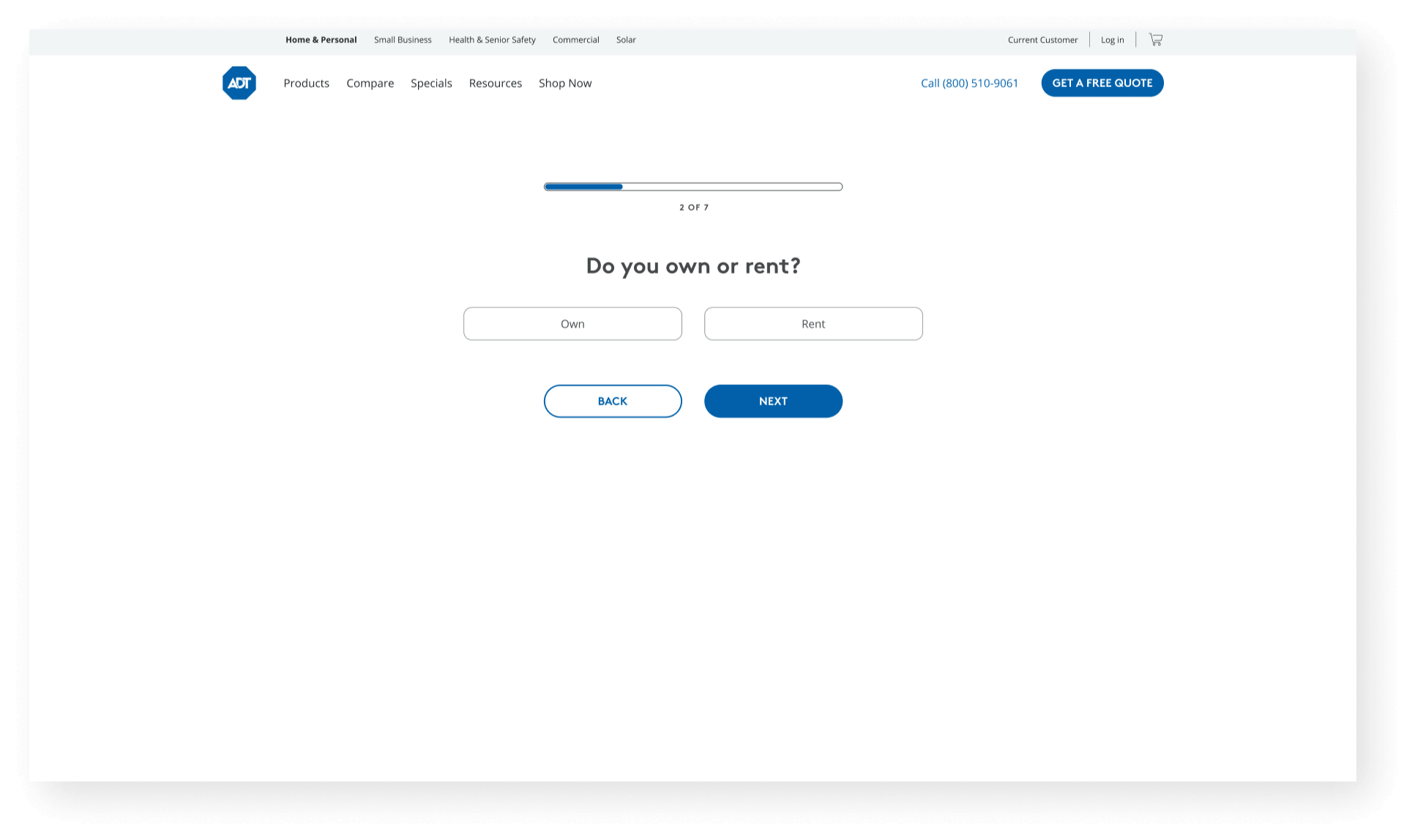
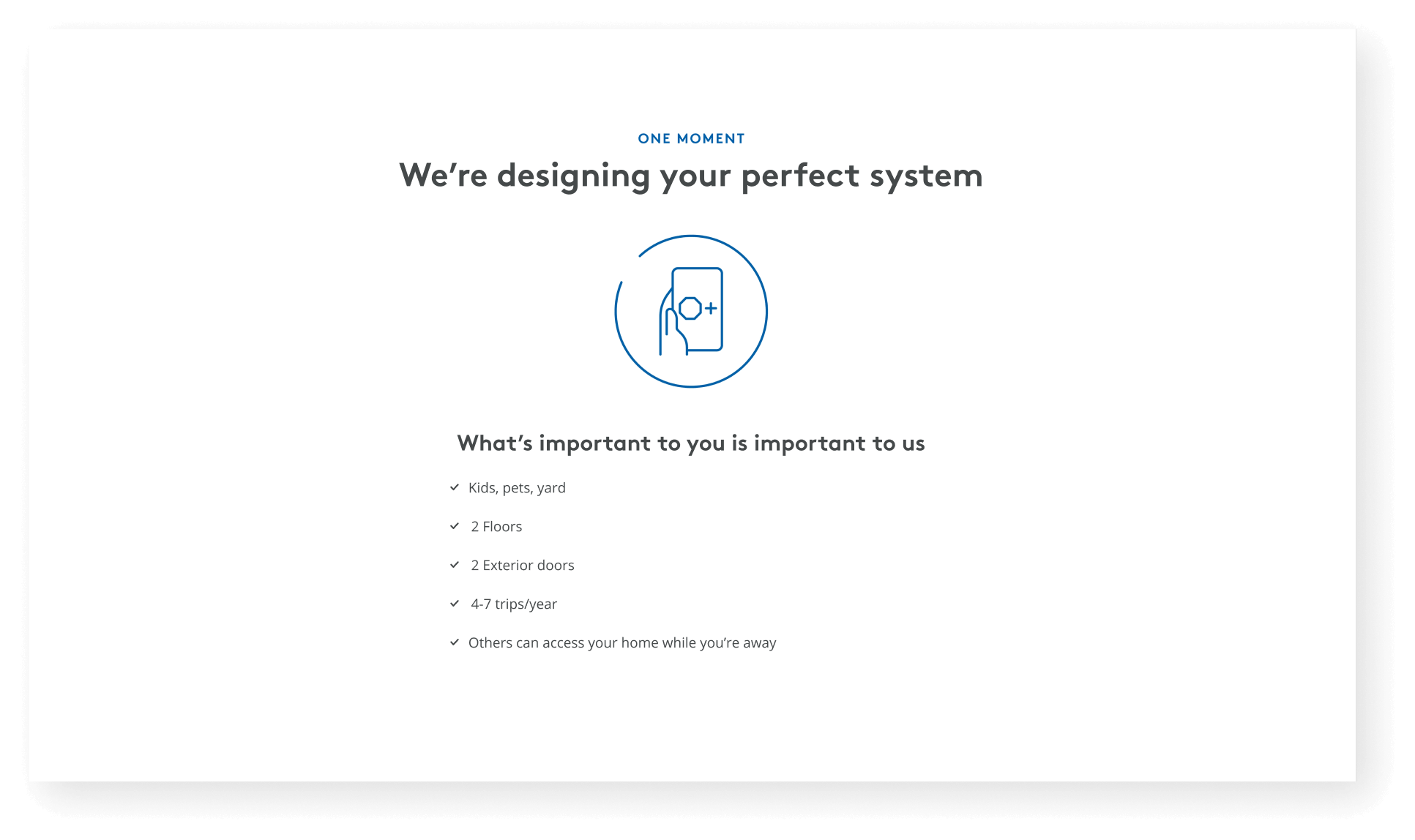
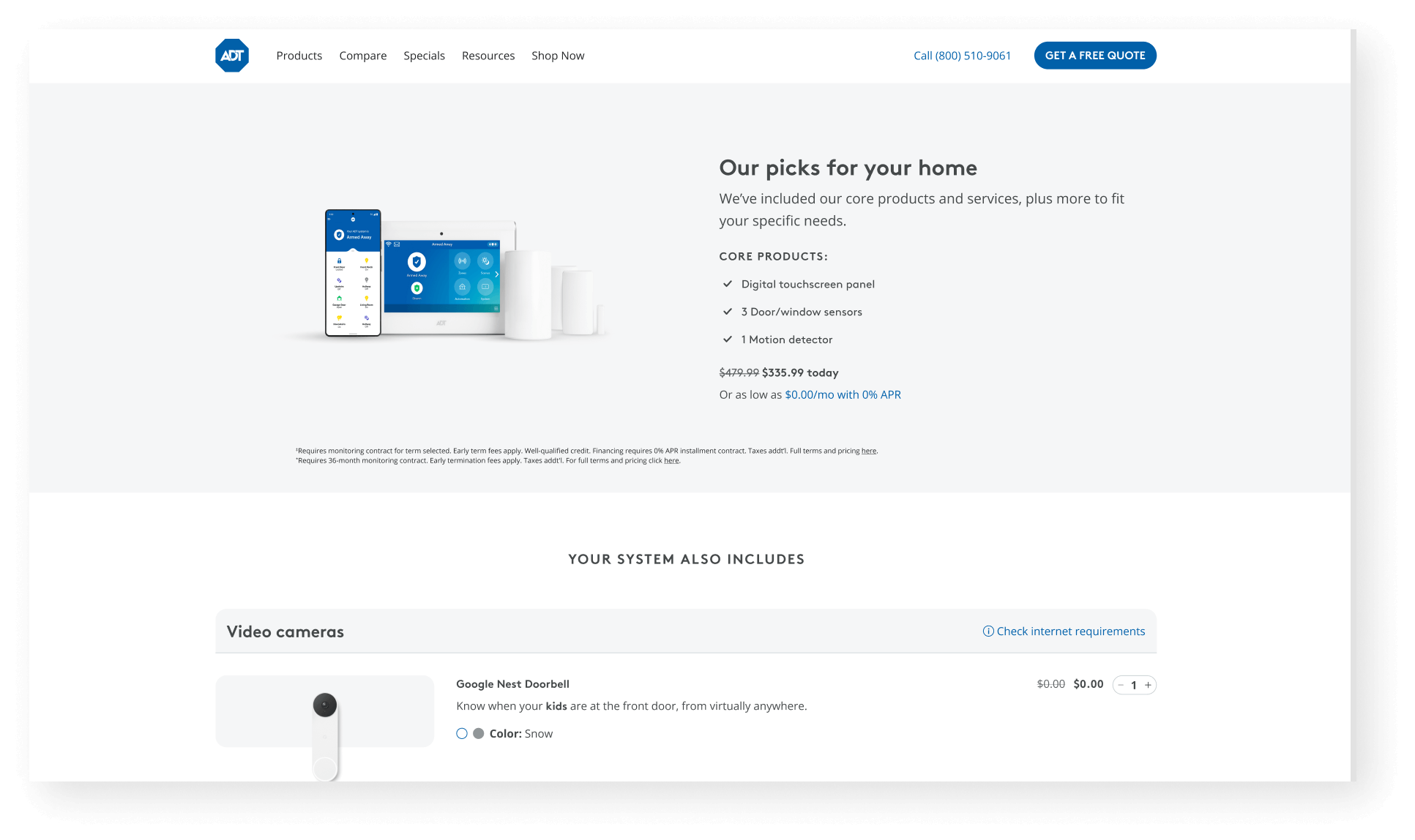
The final quiz moved users through a short set of lifestyle-based questions, followed by a loading screen that recapped their stated needs and framed them as jobs to be done. The results page was e-commerce-focused: a personalized system recommendation designed to convert, not just inform.
Leadership & Collaboration
As Director, I set the strategic direction and owned the decision-making framework. Key leadership moments included:
- Defining the principles before the team started designing, giving them a clear target and reducing rework
- Directing the research strategy — structuring usability testing rounds to build fidelity progressively rather than testing a finished product once
- Holding the line on simplicity — a short, focused quiz is harder to build than a long one, because it requires harder editorial choices about what to include
Impact & Outcomes
The quiz removed the primary barrier blocking undecided shoppers from committing to a purchase: cognitive overload from too many choices and too little guidance. By reframing the decision in lifestyle terms and guiding users to a personalized result, the quiz turned an intimidating purchase into a manageable one.
The project introduced a "jobs-to-be-done" framing to ADT's e-commerce design practice — a shift from product-centric thinking to customer-need-centric thinking — and established a model for iterative, usability-tested product design that the team applied to subsequent projects.
E-commerce Configurator Quiz — silent screen recording, video 4 of 1