Corporate Design Principles
Spearheaded a cross-departmental initiative to create ADT's first-ever shared design principles—giving five separate creative teams a common language, shared standards, and a unified creative culture.
- Team
- 1 UX Lead16 UX/UI
- Timeline
- Cross-departmental, multiple workshops
- Category
- Design Leadership
- Impact
- First shared design principles at ADT
Published: Feb 2020
TL;DR
ADT's creative organization had five design teams working in silos with no common language or shared standards for evaluating work. I spearheaded the initiative to create ADT's first corporate Design Principles — a cross-departmental collaborative process spanning team brainstorms, a joint workshop, copywriting refinement, design leader iteration, and executive alignment with the Marketing Leadership Team. The final principles were illustrated, embedded in brand guidelines, and distributed through practical tools that kept them visible during the creative process. The result was the first shared creative infrastructure at ADT — giving the organization the common language it needed to critique, communicate, and maintain quality at scale.
Context & Challenge
The Problem
ADT had multiple design teams working across a variety of functions — web & e-commerce UX, in-house brand creative, product UX, copywriting, and customer experience — but no cohesive design culture connecting them. I had been running a cross-departmental Design Review call for many years and noticed a recurring pattern: due to a lack of common creative infrastructure, the teams had trouble communicating. Feedback during reviews was imprecise, subjective, and sometimes contradictory — because there was no shared language or agreed-upon standards.
This wasn't a design quality problem in isolation — it was an organizational capability problem. As ADT scaled, the absence of shared principles created compounding friction: inconsistent output, slower reviews, harder onboarding, and creative decisions made on instinct rather than shared principle. I critically wanted the process to be genuinely collaborative — so that all teams involved felt invested in the result, not handed down standards from above.
Research & Discovery
Understanding the Landscape
The project started with a clear-eyed assessment of the existing design culture. I assembled the entire cross-departmental creative organization to align on goals before any design work began — establishing shared ownership from day one.
As a group, we reviewed well-respected brands that inspired us and analyzed their design principles as a frame of reference. This exposed the teams to what strong, well-articulated principles looked like and surfaced which qualities mattered most to the people in the room.
Design & Solution
A Collaborative Process
The design principles were built through a structured, multi-phase process — not handed down from leadership:
-
Internal team brainstorms. Each team held independent sessions to ideate on key themes. Working independently first prevented groupthink and ensured each team's perspective was captured before cross-team discussion.
-
Cross-departmental workshop. All design teams regrouped for a facilitated workshop to cluster themes, distill the list to a core set of principles, and elaborate on each. This was the synthesis moment: where five teams' independent work became a unified set of ideas.
-
Language refinement. The copywriting team refined the language around each theme. Design principles are only useful if they're memorable and precise — vague language produces vague results.
-
Iteration across design leaders. Design leaders across all functions helped revise and iterate until all parties were satisfied. This stage required active facilitation — reaching alignment across five teams with different working styles and creative priorities.
-
Executive alignment. I presented the final draft to the Marketing Leadership Team for organizational endorsement before rollout.
Bringing the Principles to Life
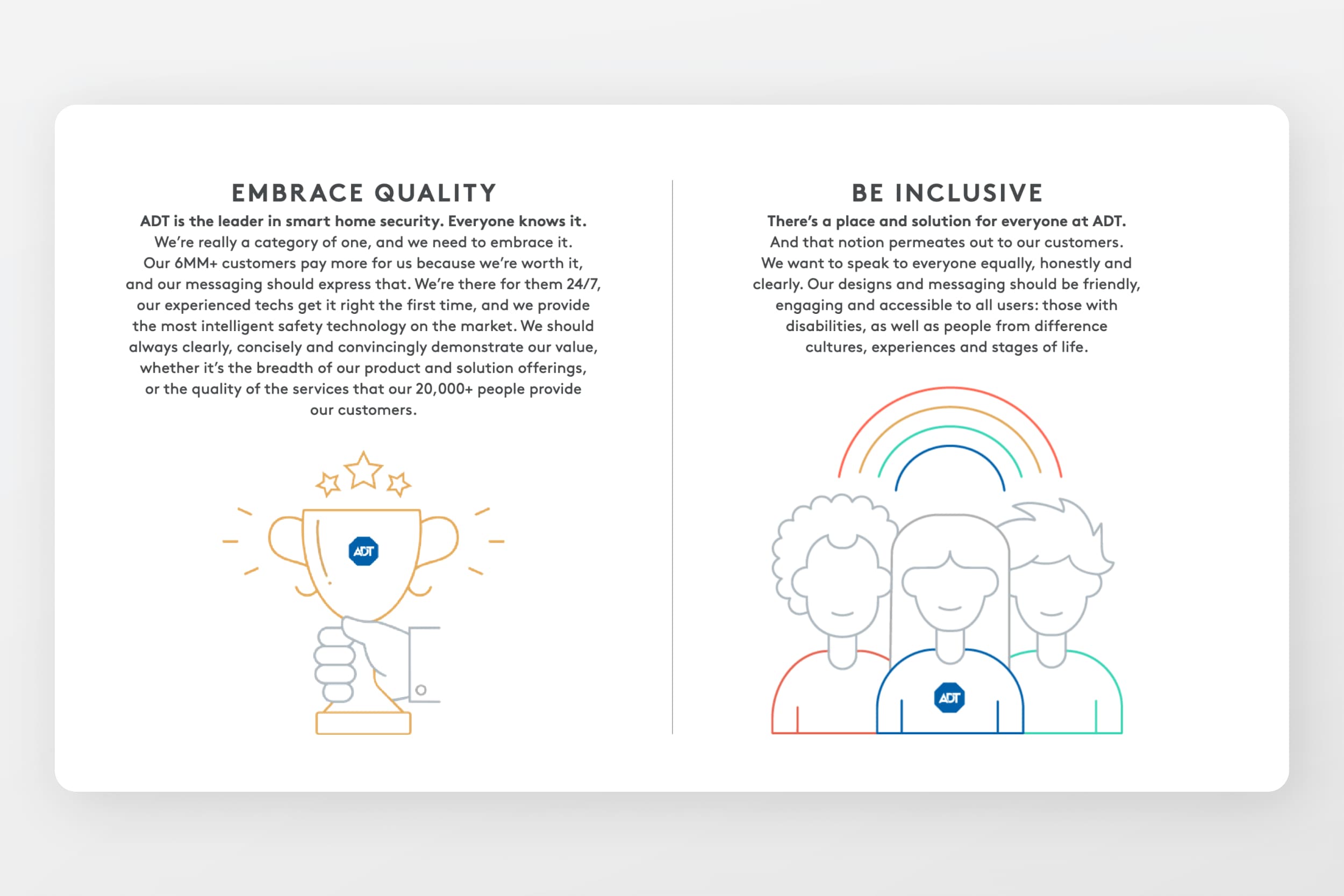
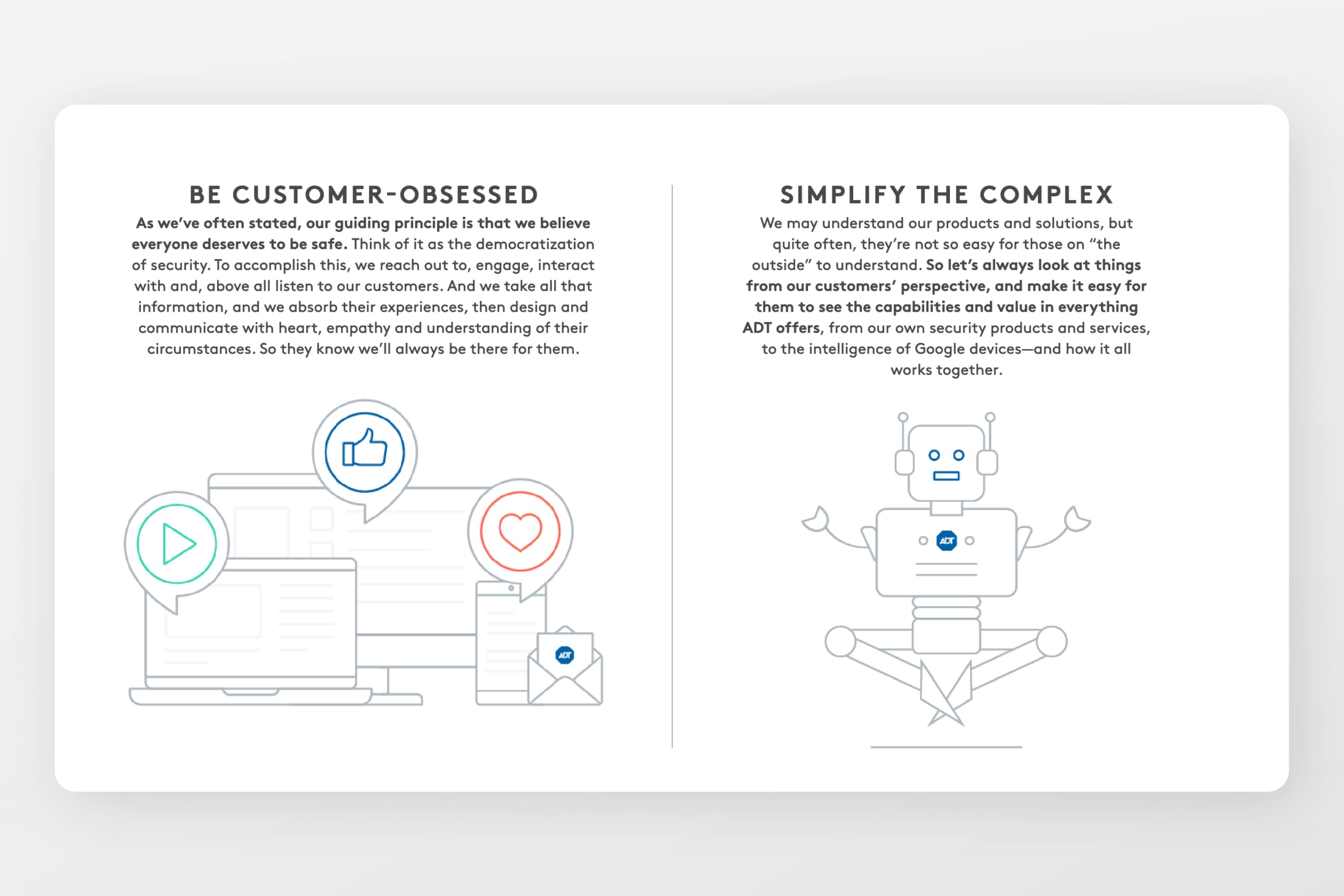
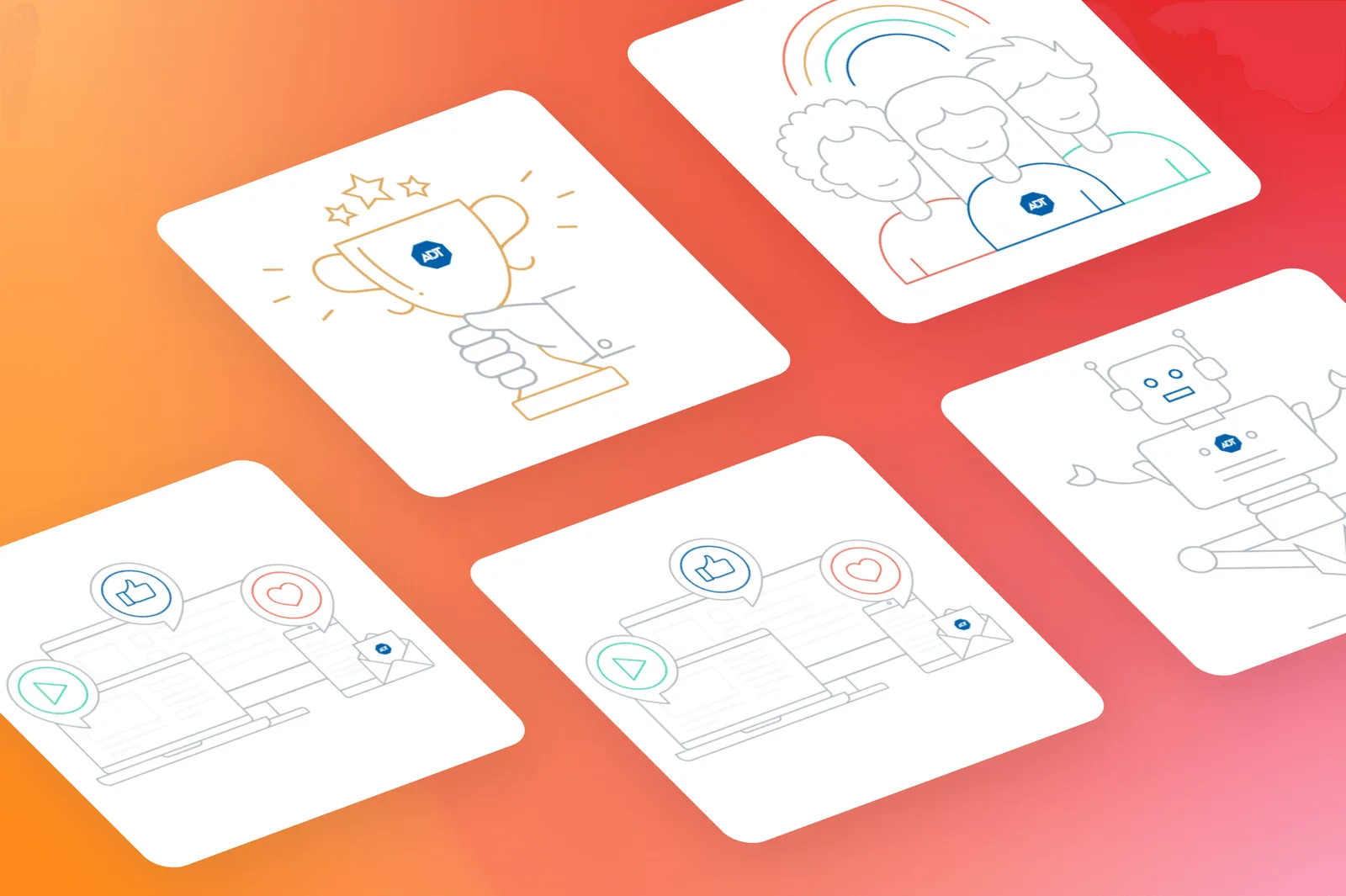
Two designers on my team created illustrations for each principle — visual expressions consistent with ADT's brand guidelines that made the principles tangible rather than abstract. To keep them top-of-mind, my team crafted practical distribution artifacts: Zoom backgrounds, desktop wallpapers, and screensavers. If the principles are visible during the design process, they're more likely to influence the work.
Leadership & Collaboration
Creating design principles is a change management project as much as a design project. The deliverable isn't a document — it's a shift in how a distributed organization evaluates and talks about creative work.
- Political awareness. Bringing five teams together to agree on shared standards means navigating competing priorities and varying degrees of buy-in. I structured the process to build investment before asking for alignment.
- Facilitation rigor. Each workshop stage had a defined output and a clear transition to the next. Without that structure, cross-departmental workshops produce energy but not decisions.
- Patience with the process. Iteration across design leaders took longer than top-down drafting would have. That tradeoff was deliberate: slower process, stronger adoption.
Impact & Outcomes
What the Principles Enabled
ADT's official Design Principles gave creative teams across the organization a shared framework for critique, analysis, and decision-making. The principles helped designers evaluate whether their work met the standards expected to represent the master brand, gave reviewers in cross-departmental Design Reviews a consistent vocabulary for feedback, and created conformity across diverse creative functions.
This was the first set of design principles of its kind at ADT — a foundational artifact that didn't exist before and couldn't have been created without cross-departmental buy-in. The principles were embedded in ADT's official Brand Guidelines, making them a durable part of the creative infrastructure rather than a one-time initiative.
This project demonstrated what design leadership looks like at the organizational level — not just leading a team, but changing how an organization thinks about and talks about design. It required influence without authority across multiple peer teams, political navigation across creative functions with different incentives, and sustained commitment to a collaborative process that was slower but more durable than a top-down approach.